

Stress not only impacts your mental health but also your stomach. Stressful days not only result in hair fall but also bloating or even worse digestive issues. It appears when you feel overwhelmed about life.
That’s not a coincidence.
You need to pay attention to your gut health, as it instantly responds to what’s happening in your mind.
In today’s world, stress has become so normal that many of us barely consider it an issue. There can be several reasons for stress.
Stress not only impacts our mood or sleep, but it can also have a big impact on our digestive system. With time, chronic stress can disrupt digestion and poor nutrient absorption and leave the body running on empty.
Let’s break down how this happens and how you can overcome it, improve your gut health, and de-stress.
What Happens in Your Body When You Experience Chronic Stress
In the UK, 79% of adults experience stress at least once a month. with 74% feeling overwhelmed or unable to cope at some point. When you’re stressed, your body goes into a defensive mode. You’re most likely to feel more protective and end up avoiding danger or reacting quickly to the stressful situation.
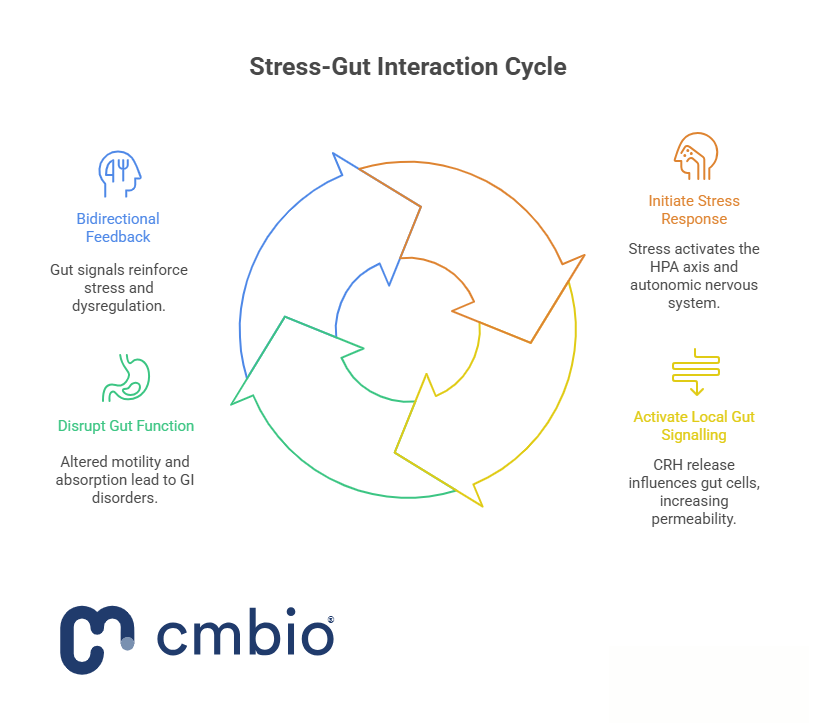
This is what chronic stress looks like. In this state of mind, your body releases stress hormones such as cortisol and adrenaline. These hormones redirect energy away from non-essential functions. You’re most likely to experience fast heart rate, shortness of breath, and muscle tense up.
This works well in the short term.
The problem starts when stress becomes chronic. This can last for weeks, months, or even years. Instead of fading away, it turns into chronic inflammation that is hard to overcome. To counter it, you need to include anti-inflammatory diet to your routine. With anti-inflammatory diet it is much easy to ensure calmness and steady energy, that gets most affected during chronic stress.
In simple words: your body can’t digest properly when it constantly feels under the skin.
Why Stress and Digestion Are So Closely Connected
Your brain and gut are in constant communication through what’s called the gut–brain connection. This means emotional and mental stress can directly influence how your digestive system functions.
When you’re relaxed, your body enters “rest-and-digest” mode. Blood flow increases, and it may affect the digestive enzymes being released, and nutrients being absorbed efficiently.
Under chronic stress, the opposite happens:
- Blood flow is diverted away from the gut
- Digestive secretions decrease
- Muscle contractions in the intestines become irregular
Over time, this disruption can lead to noticeable digestive symptoms and less obvious nutrient deficiencies.
How Does Chronic Stress Disrupt Digestion?
1. It Alters How Food Moves Through the Gut
Stress can cause food to move too quickly or too slowly through the digestive system. Here are some of the cases:
- Fast movement may lead to diarrhea and poor nutrient absorption
- Slow movement that can result in constipation, bloating, and discomfort
That is why some people may experience stress-related diarrhea, while others feel constantly backed up.
2. It Reduce Acid and Digestive Enzymes
Digestion begins in the stomach. The right amount of stomach acid and enzymes are essential to break down food, especially proteins and minerals.
Chronic stress can reduce the production of:
- Stomach acid
- Digestive enzymes
When food is hard to digest, it becomes much harder for your body to extract nutrients, even if you’re eating healthy and maintaining a healthy routine.
3. It Contributes to Gut Discomfort
Digestive issues are related to stress. This includes:
- Bloating and gas
- Abdominal cramping
- Heartburn or acid reflux
- Nausea
These symptoms aren’t “all in your head.” They’re real physical responses driven by stress-related changes in gut function.
Stress and Nutrient Absorption: What’s the Connection?
Digestion and nutrient absorption go hand in hand. If digestion is disturbed, absorption is usually gets affected.
Here’s how chronic stress can impact the absorption of nutrients:
-
Digestion Means Poor Absorption
If food isn’t fully broken down, nutrients can’t be absorbed in the small intestine. This can affect both macronutrients (proteins, fats, and carbohydrates) and micronutrients (vitamins and minerals).
-
Increased Inflammation in the Gut
Long-term stress can promote low-grade inflammation in the digestive tract. Inflammation can damage the intestinal lining, making it harder for nutrients to pass through properly.
Key Nutrients Commonly Affected by Stress
Nutrients play a pivotal role during chronic stress. You need to intake nutrients like:
- Magnesium: important for relaxation and muscle function. It is found in green leafy vegetables, such as spinach, legumes, nuts, seeds, and whole grains.
- Iron: is the best source for energy and oxygen. Iron rich food includes: red meat, poultry, fish, eggs, liver) and plant-based foods (like beans, lentils, spinach, fortified cereals, nuts, seeds, tofu, dried fruits).
- B vitamins: is important for quick energy, mood, and nervous system health. It is best found in meats, fish, eggs, dairy, and leafy greens. Also, legumes such as (beans, lentils, chickpeas), nuts, seeds, and whole grains are rich in vitamin b.
- Zinc: supports immunity and improves overall digestion. Zinc rich food items are oysters, red meat like beef, pork, poultry, and seafood such as lobster or crab.
Ironically, these are the same nutrients the body needs more of during stress.
Common Poor Digestive Signs That Can Be Due to Chronic Stress
Can’t figure out whether it’s chronic stress that is affecting your digestion or not. Some common signs include:
- Frequent bloating or gas
- Irregular bowel movements
- Feeling overly full after small meals
- Low energy or fatigue
- Cravings for sugar or comfort foods
With time, you can see also see the impact of deficiencies caused by poor absorption, which can also show up as:
- Brain fog
- Weak immunity
- Hair thinning or brittle nails
- Mood changes
To overcome it, you need to intake some comforting foods to avoid chronic stress. Some of the best options to try are:
-
Home made warm, comforting foods: Go for soups, stews, and porridges to start your day.
-
Magnesium-rich foods: Start incorporating leafy greens, oats, and bananas into your diet.
-
Protein that are easy to digest: While in stress, you don’t want your digestive system to overwork. Therefore, go for easy to digest food like: eggs, yogurt, and lentils.
-
Healthy fats: For healthy fats, it’s important to consume olive oil, avocados, and nuts.
-
Fermented foods: yogurt, kefir, lightly fermented veggies)
Foods to Intake To Overcome Chronic Stress
1. Oatmeal Bowl
Why it helps:
Oats support gut health, stabilize blood sugar, and provide magnesium, all helpful during stress.
Ingredients:
-
Rolled oats
-
Water or milk (dairy or plant-based)
-
Banana slices
-
Chopped almonds or walnuts
-
Pinch of cinnamon
How to make:
Cook oats slowly until soft. Top with banana, nuts, and cinnamon.
Stress bonus:
Warm, soft texture is soothing for the nervous system.
2. Gut-Friendly Yogurt Bowl
Why it helps:
Provides probiotics for gut balance and protein for steady energy.
Ingredients:
-
Plain yogurt or Greek yogurt
-
Berries
-
Honey (optional)
-
Chia or flax seeds
How to make:
Mix everything together and eat slowly.
Tip:
Choose unsweetened yogurt to avoid blood sugar spikes.
3. Simple Vegetable & Lentil Soup
Why it helps:
Soups are easy to digest and hydrating, ideal when stress suppresses appetite.
Ingredients:
-
Red lentils
-
Carrots, zucchini, spinach
-
Garlic and turmeric
-
Olive oil
-
Water or vegetable broth
How to make:
Simmer all ingredients until soft. Blend lightly if needed.
Stress bonus:
Warm liquids activate digestion and calm the gut.
Why Does This Matter in the Long Run?
Stress is interlinked with digestive issues, and these can be long term. Chronic digestive disruption may contribute to:
- Ongoing gut discomfort or IBS-like symptoms
- Food sensitivities
- Repeated nutrient deficiencies
- Increased inflammation in the body
Because digestion fuels our system. Be it immunity, hormones, or mental health, simple life choices can make your life easy. If compromised, nutrient absorption can affect overall well-being far beyond gut health.
Simple Ways to Support Digestion During Stress
The good news? You don’t need to eliminate stress completely to protect your digestion. Small, consistent habits can make a big difference.
1. Slow Down While Eating
How you eat matters just as much as what you eat.
- Sit down for meals
- Chew thoroughly
- Avoid eating while rushing or distracted
Even a few deep breaths before eating can help shift your body into “digest” mode.
2. Focus on Easy Stress Management
You don’t need complicated routines. Simple practices help calm the nervous system:
- Deep breathing
- Walking or light movement
- Adequate sleep
- Short moments of mindfulness during the day
Lower stress signals result in better digestion.
3. Choose Easy-to-Digest, Nourishing Foods
During stressful periods, prioritize foods that are:
- Well-cooked
- Balanced with protein, healthy fats, and fiber
- Gentle on the stomach
Hydration also plays a key role in digestion and nutrient absorption.
Bottom Line
Chronic stress doesn’t just affect your mood; it affects your digestive system, too. All the nutrients that fuel your body can go to waste. When stress becomes a constant part of your routine, your digestion quietly becomes hard.
The key takeaway? Better digestion is not only about nutrient intake; it’s about calming the nervous system, too.
By lowering the stress level, eating more mindfully, and making small changes, you can help your gut function better. You’ll feel more energized, even in a busy, demanding world.
Your gut is listening, and mindful decisions go a long way.