You’ve cut back on sugar, started counting calories and swapped processed foods for whole ones. On paper, your diet looks better than ever. So why are you tired, hungry, irritable, or nervous about every meal?
Healthy eating should leave you feeling better. If it’s leaving you drained or anxious around food, the problem may not be what you eat but how tightly you’ve locked down how you eat. Skipping meals, cutting out whole food groups, sticking to strict calorie limits and feeling guilty about certain foods can all wear on your body and your mind.
A diet can look healthy from the outside and still fall short on the energy and nutrients you need. Sometimes habits that start with good intentions slide into unhealthy eating patterns.
So how do you tell if your diet is doing more harm than good? Here are five signs to watch for, and what to do about each one.
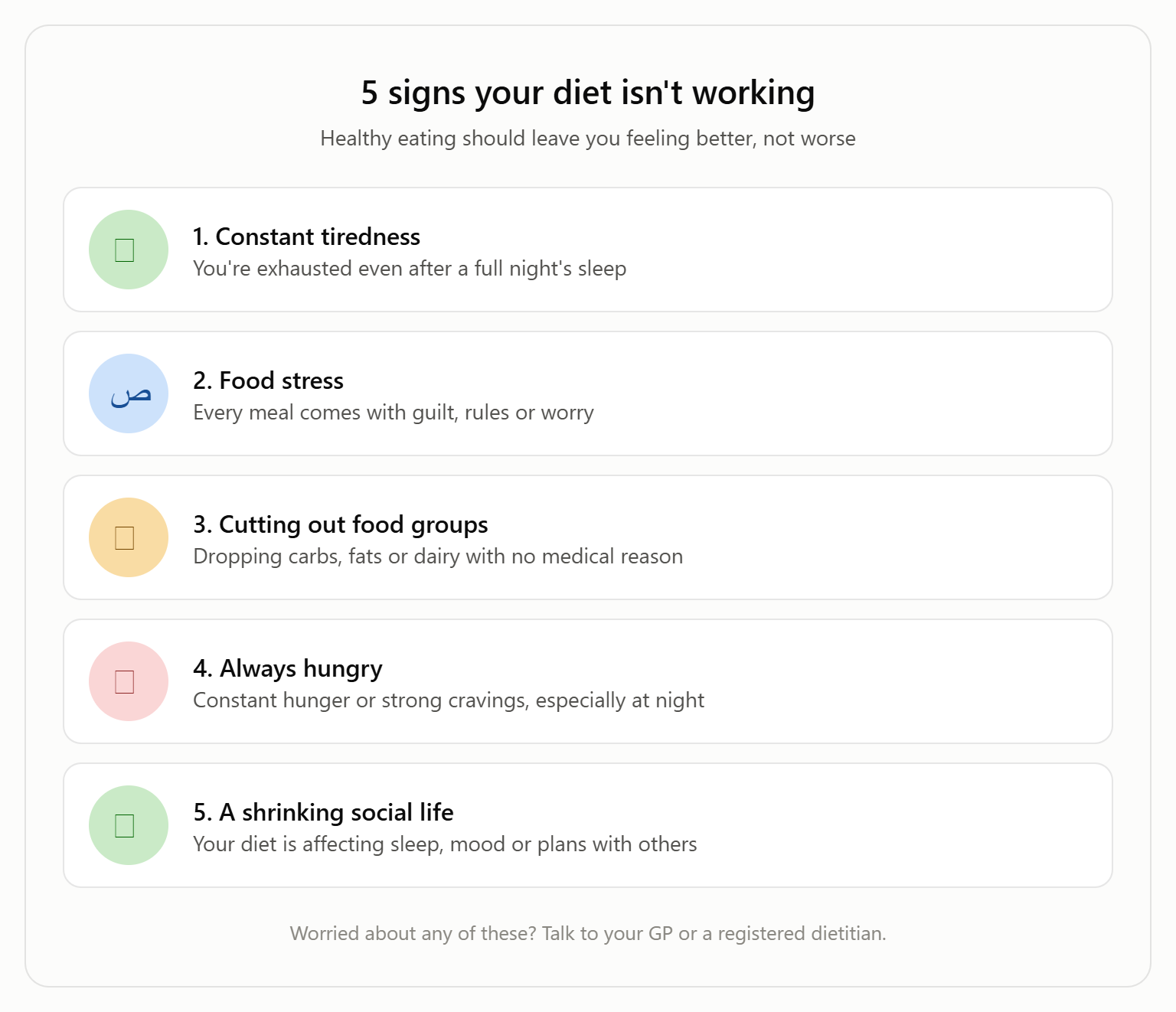
Sign #1: You’re tired all the time, even after enough sleep
Do you wake up exhausted after seven or eight hours in bed? Or hit a wall every afternoon and struggle to concentrate?
Poor sleep, stress and several medical conditions can all cause fatigue, but your diet might be part of it. Your body needs enough calories and nutrients for everything from organ function to a walk to the shop. Eat less than you need, day after day, and you’ll feel it.
This tends to happen when you:
- Skip breakfast or regularly miss meals to cut calories.
- Follow a very low-calorie diet without professional guidance.
- Cut out carbohydrates without replacing the energy they provide.
- Avoid foods that supply iron, vitamin B12 or other essential nutrients.
- Eat portions so small that you’re hungry all day.
Say you’re trying to lose weight and swap lunch for a small salad. Vegetables are good for you, but a salad with little protein, carbohydrate or fat won’t keep you going until dinner.
Nutrient deficiencies can add to the tiredness. Low iron can lead to iron-deficiency anaemia, which causes fatigue and weakness. Low vitamin B12 can affect energy levels and the nervous system. The NHS lists constant tiredness, weakness, poor concentration and unintentional weight loss among the signs of malnutrition.
What can you do?
Look at what your meals actually give you, not only how few calories they contain. Aim to combine protein, carbohydrates, healthy fats and fibre. Eggs with wholegrain toast, chicken with brown rice, or lentils with vegetables will fill you up far better than a plate of low-calorie foods.
If you’re eating enough and resting well and still feel wiped out, see a healthcare professional to look for other causes.
Sign #2: Food has become a source of stress instead of enjoyment
There was a time when choosing a meal was easy. You picked something you liked, ate it and got on with your day.
Now maybe every meal involves checking calories, reading ingredient lists and wondering whether the food “fits.” If that sounds familiar, your approach may have become too restrictive.
Paying attention to nutrition is a good habit. Constant worry about food quality, calories or ingredients is something else.
You might notice that you:
- Feel guilty after eating chocolate, biscuits, pizza or anything you’ve labelled unhealthy.
- Sort foods into strict categories like clean, dirty, good and bad.
- Spend a long time checking labels and calorie counts.
- Get anxious when you can’t stick to your usual meal plan.
- Avoid restaurants because you can’t control how the food is prepared.
- Feel that a single unplanned meal has ruined your whole diet.
Behaviour like this can overlap with orthorexia, a term for an unhealthy fixation on eating foods you see as healthy or pure. Orthorexia isn’t a formal diagnosis in the DSM-5-TR, but eating disorder professionals take it seriously. The National Eating Disorders Association (NEDA) names compulsively checking ingredient lists, gradually cutting out food groups and becoming distressed when preferred foods aren’t available as possible warning signs.
Checking a label, or following a particular eating style, doesn’t mean something is wrong. The concern starts when food rules begin to run your thoughts, your mood and your daily choices.
What can you do?
Build in some flexibility. You don’t have to follow every nutritional rule to eat well. A slice of cake at a birthday party or your favourite takeaway on a Saturday doesn’t undo anything.
Judge your eating by the pattern over weeks, not by each individual meal. If anxiety about food is getting in the way of daily life, talk to a registered dietitian or a mental health professional with experience in disordered eating.
Sign #3: You’re cutting out entire food groups without a medical reason
Carbs make you gain weight. Fat is bad. Dairy wrecks your digestion. Gluten is unhealthy.
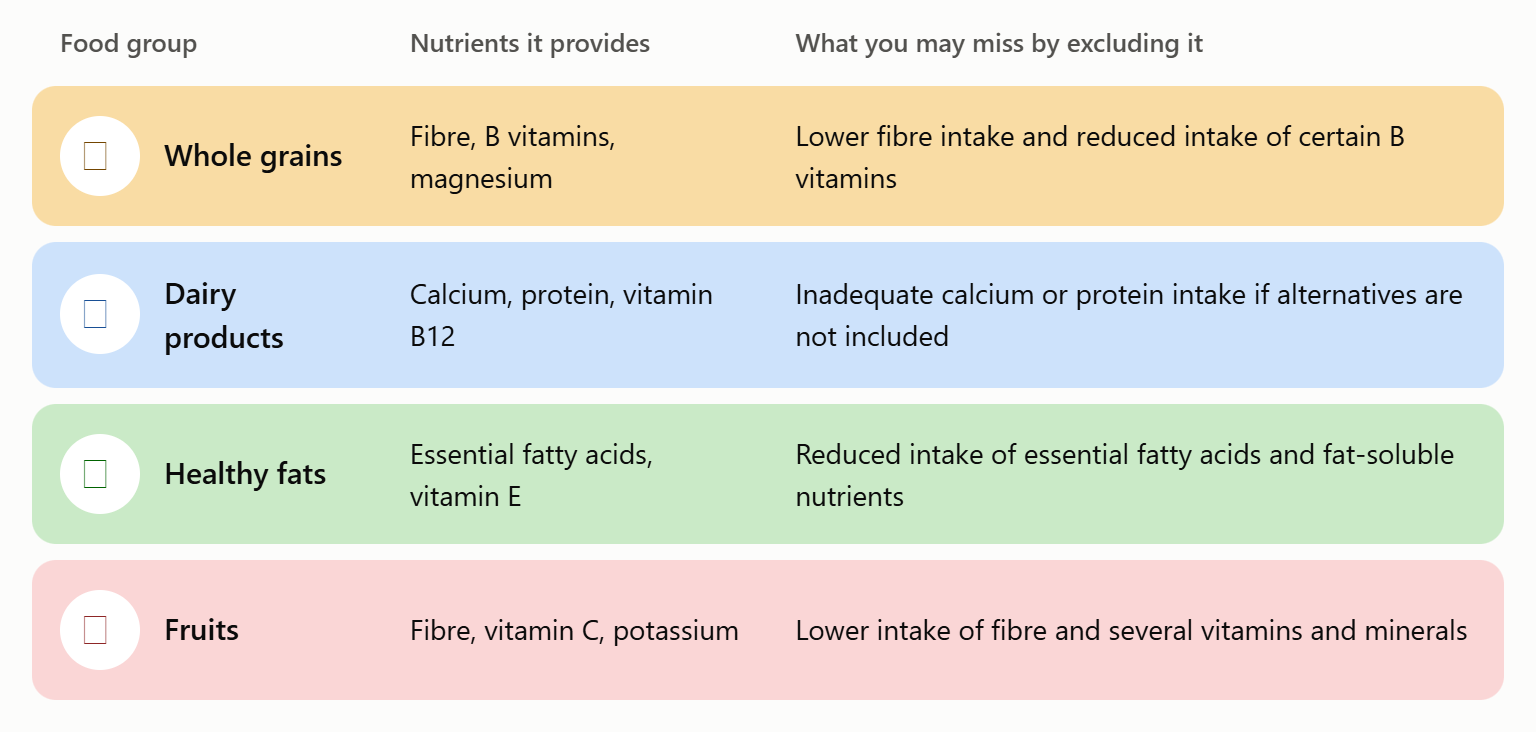
You’ve probably run into at least one of these claims while researching diets or scrolling social media. But dropping a whole food group doesn’t make a diet healthier by default. Each group supplies different nutrients, and removing one without replacing what it provides can leave gaps, especially if your food choices are already narrow.
Some people do need to avoid certain foods because of allergies, intolerances, coeliac disease or other medical conditions. Even then, the diet still has to deliver enough nutrition. The trouble starts when a food gets removed only because it has a bad reputation.
Take carbohydrates. They’re a main source of energy, and whole grains, potatoes, oats, fruit and legumes also bring fibre, vitamins and minerals. If you’ve been skipping carbs at dinner because you think they cause weight gain, our guide on whether eating carbs at night makes you gain weight is worth a read.
Fat isn’t something to avoid entirely either. It supports hormone production, helps you absorb fat-soluble vitamins and supplies essential fatty acids.
What can you do?
Before cutting a food, ask what it contributes to your diet and where it fits. If you have a medical reason to avoid a food group, ask a registered dietitian which alternatives will cover what you’re missing. The goal is to replace the nutrients, not just remove the food.
Read more: 10 Keto-Friendly Snacks for Beginners
Sign #4: You’re always hungry or fighting intense cravings
You finish lunch and an hour later you’re already thinking about the next meal. Or you spend the day ignoring hunger, then get hit with strong cravings at night.
Constant hunger has plenty of possible causes, including changes in activity, sleep, stress, medication and your own nutritional needs. But it can also mean you’re simply not eating enough, which is common on restrictive plans built around cutting calories.
Picture skipping breakfast, having a small salad at lunch and a light dinner to hit a tight calorie target. You may feel in control at first, but the hunger builds. Your body responds to restriction by turning up hunger signals and pushing you toward food.
That’s one reason strict diets are so hard to keep up. Many people get stuck in a loop:
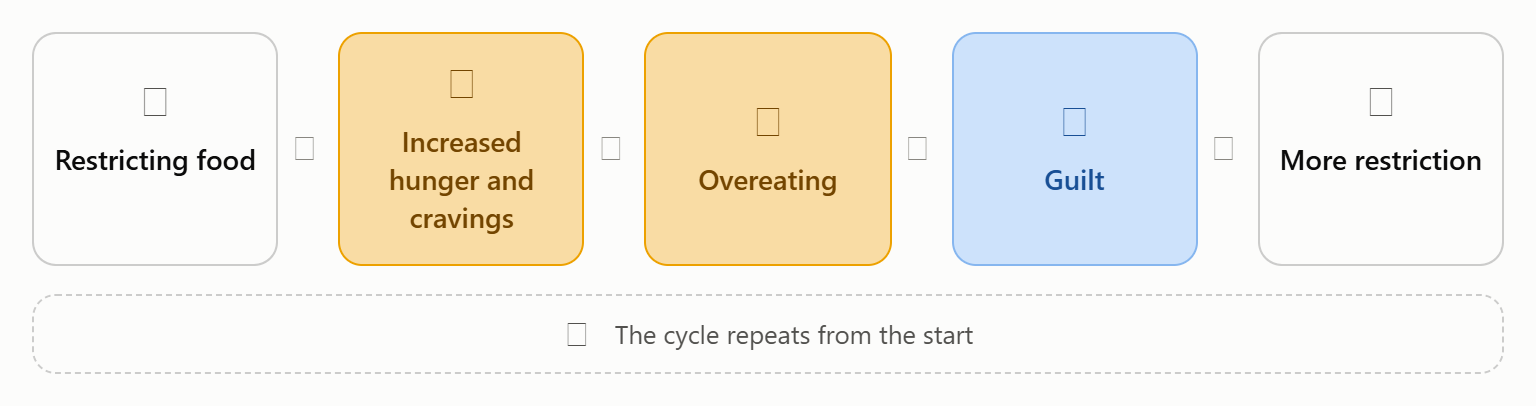
It gets worse when you read overeating as failure.
Meal composition matters too. A meal low in protein or fibre won’t keep you full for long. Protein helps maintain muscle and keeps you satisfied, and fibre-rich foods support digestion and fullness. For more detail, see How Much Protein Do You Actually Need to Lose Weight?, which covers protein for weight management without crash dieting.
What can you do?
Don’t try to push through hunger. Check whether your meals have enough energy and nutrients. A balanced meal might include:
- Protein: eggs, chicken, fish, tofu, beans or lentils.
- Fibre-rich carbohydrates: oats, brown rice, wholegrain bread, potatoes or fruit.
- Healthy fats: nuts, seeds, avocado or olive oil.
- Vegetables: a mix of colours for fibre, vitamins and minerals.
If you’re hungry between meals, have a snack. Greek yogurt, fruit with nuts, or wholegrain toast with peanut butter all work. Hunger isn’t an obstacle to beat on the way to your health goals.
Sign #5: Your diet is affecting your sleep, mood or social life
A healthy eating plan should fit around your life. It shouldn’t make you dread a family dinner or feel guilty for eating something outside your routine. Restrictive diets tend to spill over into other areas, and three are worth checking.
Your sleep is getting disrupted
Going to bed hungry to protect a calorie deficit makes it hard to settle. Some people wake up hungry or struggle to fall asleep when they eat too little over a long stretch. Poor sleep has many causes, but if yours started after a big change in how you eat, look at your diet.
You’re more irritable or anxious
Do you snap when you miss a meal or can’t eat what you’d planned? Not eating enough can affect mood, concentration and energy. Worrying about calories or “breaking” food rules adds its own stress. Over time, a strict diet can make eating feel like a chore you have to get right every day.
You’re avoiding social situations that involve food
This one is easy to miss. Maybe you turn down dinner invitations because you don’t know what will be served, skip restaurants because you can’t count the calories, or feel uneasy when friends suggest a takeaway or sharing dessert. When food rules start getting in the way of friendships and ordinary experiences, it’s time to rethink the approach.
What can you do?
Let yourself enjoy meals with other people without running through the rulebook. Keep your eating regular, leave room for foods you like, and don’t make up for a social meal by skipping food the next day.
How to build a healthier relationship with food
Spotting the warning signs is the first step. The next is changing things in a way that supports your health without piling on rules. You don’t have to give up your nutrition goals. Aim for habits that are realistic, flexible and suited to you.
1. Stop treating certain foods as completely off-limits
You don’t need to eliminate everything with sugar, fat or carbohydrate in it. Instead of calling foods good or bad, think about what they offer and how often they show up in your week. A balanced diet can have vegetables, whole grains, lean protein and the occasional treat.
2. Look at nutritional balance, not just calories
Calories count, but they’re only one measure. Your body also needs protein, carbohydrates, fats, vitamins, minerals and fibre. Swapping a meal for a low-calorie snack might lower your intake, but it probably won’t give you enough nutrients or keep you full. Ask what a meal does for your body, not only what it adds up to on a tracker.
3. Eat enough to support your day
Your needs depend on age, body size, activity level, health conditions and goals. Someone who trains regularly needs more energy than someone with a desk job. Avoid extremely low-calorie diets unless a professional is guiding you. If you want to lose weight, choose a plan that accounts for your nutritional needs instead of severe restriction.
4. Pay attention to hunger and fullness
Appetite shifts through the day, and that’s normal. Rather than sticking to a rigid schedule that ignores hunger, notice how your body responds to food. Eat when you’re hungry, take your time, and stop when you feel comfortably full.
5. Make room for foods you enjoy
A diet that bans everything you love is hard to stick to. You should be able to share a meal with friends, have dessert at a celebration or order your favourite takeaway without guilt. Healthy eating is judged over months, not by a perfect day.
6. Get professional help when you need it
If you often feel fatigued or dizzy, or have unexplained weight changes, digestive problems or anxiety around food, speak to a healthcare professional. A registered dietitian can assess what you need, find gaps and help you put together a plan that works. If restrictive eating or food anxiety is affecting your mental health, a mental health professional who works with eating disorders may also help.
Read more: 9 High-Protein Snacks Under 200 Calories You Can Eat On the Go
Wrapping Up
Healthy eating isn’t about the strictest meal plan, cutting out everything you enjoy or hitting a number on the scale. It’s about getting the nutrients and energy your body needs while keeping habits that are good for your body and your head.
If your current diet leaves you tired, hungry, anxious or cut off from friends, that’s your cue to change course. Start small: add a proper meal where you’ve been skipping one, or let one “off-limits” food back onto your plate this week. If things don’t improve, book an appointment with your GP or a registered dietitian.
FAQs
- How do you know if your diet is unhealthy?
Common warning signs include persistent fatigue, constant hunger, nutritional deficiencies, unexplained weight changes and anxiety around food. If your eating habits are affecting your physical health or daily life, review your diet with a healthcare professional.
- Can eating too healthy become unhealthy?
Yes. Nutritious food is good for you, but becoming overly restrictive or fixated on food quality can cause problems. Constantly cutting out foods, feeling guilty after certain meals or avoiding social events because of what’s on the menu can point to an unhealthy relationship with eating.
- What happens when you don’t eat enough calories?
If you regularly eat too little, your body doesn’t have the energy to run its daily functions. Depending on how severe it is and how long it lasts, effects can include fatigue, weakness, nutrient deficiencies, difficulty concentrating, and changes in reproductive or hormonal function.