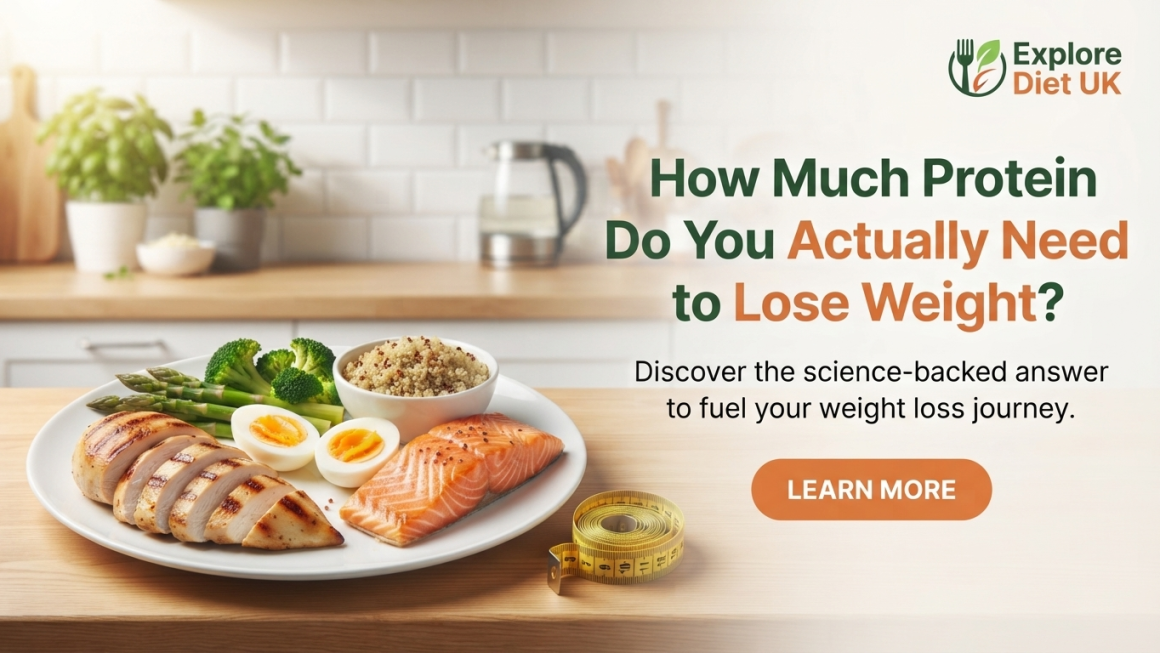
To loose weight without losing muscle you actually need 1.2–1.6 grams of protein per kilogram of body weight per day.
Protein is an excellent source to maintain healthy weight. But the real challenge comes in when you’re determining how much protein is enough for weight loss. Loosing weight without crash diets is the real struggle.
If you’re trying to lose weight, you’ve probably heard the same advice over and over: eat more protein.
Protein can help you feel fuller after meals, make it easier to stick to a calorie deficit, and help protect your muscle while you lose body fat.
Let’s further breakdown the protein intake to maintain healthy weight.
How Much Protein Do You Need to Lose Weight?
A simple way to estimate your protein intake for weight loss is:
Body weight in kg × 1.2–1.6 = grams of protein per day
For example, if you weigh 70 kg:
- 70 × 1.2 = 84 g
- 70 × 1.6 = 112 g
So, roughly 84–112 grams of protein per day would be a reasonable range to consider.
Here’s a quick reference:
| Body weight | Approximate daily protein |
| 50 kg | 60–80 g |
| 60 kg | 72–96 g |
| 70 kg | 84–112 g |
| 80 kg | 96–128 g |
| 90 kg | 108–144 g |
| 100 kg | 120–160 g |
You don’t need to hit an exact number every day. Think of this as a target range, not a pass-or-fail test.
If you’re significantly overweight, calculating protein from your goal weight or another appropriate reference weight may sometimes be more practical than using your current weight. This is one reason individualized nutrition advice can be useful.
Why Is Protein So Helpful for Weight Loss?
Protein isn’t a magic fat burner. You still need to consume fewer calories than your body uses over time to lose weight.
What protein can do is make that process easier.
1. Protein Helps You Feel Fuller
Ever eaten a bowl of cereal and felt hungry again an hour later?
Compare that with a meal containing eggs, Greek yogurt, chicken, fish, tofu, or lentils. Protein tends to be more filling, and research in people with overweight or obesity suggests higher protein intake may improve feelings of fullness.
That can be particularly helpful when you’re eating fewer calories.
2. Protein Helps Preserve Muscle
When you lose weight, you don’t want every kilogram lost to come from muscle.
A calorie deficit can cause some loss of lean mass, which is why protein becomes particularly important during dieting. Resistance training alongside adequate protein can provide an even better environment for maintaining muscle.
3. Protein Takes More Energy to Digest
Your body uses energy to digest and process the food you eat. Protein has a higher thermic effect than carbohydrates and fat.
That doesn’t mean eating protein will magically increase your metabolism enough to cancel out excess calories. But it is one reason protein-rich diets can be useful as part of an overall weight-loss strategy.
Read More: High Protein Diet Plan for Fat Loss (7-Day Diet Plan Inside)
How Much Protein Should You Eat at Each Meal?
You don’t need to eat all your protein at dinner.
I generally recommend spreading your intake throughout the day rather than trying to cram it into one enormous meal.
For example, if your target is around 100 g per day, you could aim for:
- Breakfast: 25 g
- Lunch: 30 g
- Snack: 15 g
- Dinner: 30 g
Research has suggested that meals containing roughly 25–30 g of protein can be a useful practical target for appetite and weight-management purposes, although individual needs vary.
The bigger priority is still your total daily intake.
What Are the Best High-Protein Foods for Weight Loss?
You don’t need to live on protein shakes and chicken breast.
A good protein diet can include plenty of variety.
Animal-based protein
- Eggs
- Chicken and turkey
- Fish and seafood
- Lean beef
- Greek yogurt
- Cottage cheese
- Milk
Plant-based protein
- Lentils
- Chickpeas
- Beans
- Tofu
- Tempeh
- Edamame
- Soy products
The best protein source is one that fits your dietary preferences, budget, culture, and lifestyle.
And remember: protein quality matters, but so does the rest of the meal. Pair protein with vegetables, fruit, whole grains, legumes, or other nutrient-rich foods rather than focusing on protein alone.
Read more: High-Protein Dinners That Won’t Spike Your Smart Meter
What Does a High-Protein Day Actually Look Like?
Here’s a simple example of how you might build your day:
Breakfast:
2 eggs + Greek yogurt + berries
Lunch:
Grilled chicken or tofu bowl with vegetables and brown rice
Snack:
Cottage cheese or a protein-rich yogurt
Dinner:
Grilled fish, chicken, tofu, or lentils with vegetables and potatoes
You can adjust portions depending on your calorie and protein needs.
The goal isn’t to make every meal “high protein.” It’s to make adequate protein a normal part of your meals.
Do You Need Protein Powder to Lose Weight?
No.
Protein powder is a convenience, not a requirement.
If you struggle to reach your protein target through food, a protein shake can make things easier. It’s particularly convenient after exercise or when you’re short on time.
But whole foods also provide other nutrients, so I wouldn’t build your entire diet around supplements.
Think of protein powder as something that fills a gap, not the foundation of your diet.
Can You Eat Too Much Protein?
Yes, and more isn’t necessarily better.
Once you’re meeting your protein needs, pushing your intake dramatically higher won’t automatically make you lose more fat.
Remember that protein still contains calories. And if you fill your diet with excessive amounts of protein while cutting out fruits, vegetables, whole grains, healthy fats, or other nutritious foods, you’re not necessarily improving your diet.
If you have kidney disease or another medical condition that affects your protein needs, don’t follow a high-protein diet without discussing it with your doctor or registered dietitian.
Is 100 Grams of Protein Enough to Lose Weight?
It can be.
Whether 100 grams is appropriate depends on your body size, activity level, age, and overall diet.
For someone weighing 60 kg, 100 g is relatively high. For someone weighing 90 kg, it may be toward the lower end of a weight-loss protein target.
That’s why there’s no single protein number that works for everyone.
Does Protein Help You Lose Belly Fat?
Protein can support overall fat loss, but you cannot specifically target belly fat by eating more protein.
As you lose body fat, your waist circumference may decrease too, but where your body loses fat first is influenced by factors such as genetics, hormones, sex, and overall body composition.
Focus on sustainable fat loss rather than trying to find a food that specifically “burns belly fat.”
What If You Don’t Exercise?
You can still lose weight without structured exercise.
But if preserving muscle is important to you, I’d strongly consider adding some form of resistance training if you’re able to do so. Protein and resistance exercise work well together for supporting lean mass. Research in healthy adults also shows that increasing protein intake can provide small additional benefits for lean body mass when combined with resistance training.
Walking, strength training, cycling, swimming, and other activities can all have a place in a weight-loss plan.
The Bottom Line
So, how much protein do you actually need to lose weight?
For many adults, 1.2–1.6 g of protein per kg of body weight per day is a practical starting range. If you’re exercising regularly, strength training, older, or dieting aggressively, your needs may be toward the higher end.
But don’t get caught up chasing the perfect number.
A successful weight-loss diet is one you can actually live with. Get enough protein, create a manageable calorie deficit, eat plenty of nutrient-rich foods, stay active, and give your body time to respond.
Protein can make weight loss easier. It doesn’t have to make your diet complicated.
FAQs
How much protein should I eat a day to lose weight?
A practical range for many adults is around 1.2–1.6 g/kg/day, although individual needs vary.
Is 100 g of protein enough for weight loss?
It can be, depending on your body weight and activity level. Someone weighing 60 kg may already be at the higher end of their target, while someone weighing 90 kg may need more.
Does eating more protein burn fat?
Not directly. Protein can increase fullness and help preserve lean mass during a calorie deficit, but losing body fat still requires an overall energy deficit.
Should I eat protein at every meal?
It’s a useful strategy. Spreading protein across meals can make it easier to reach your daily target and build more satisfying meals.
Can I lose weight on a high-protein diet without exercising?
Yes, calorie reduction can produce weight loss without exercise. However, resistance training can be particularly helpful for maintaining muscle while losing weight.
Is too much protein bad for weight loss?
More protein isn’t automatically better. Extremely high intake can add unnecessary calories and crowd out other important foods. People with kidney disease or other relevant medical conditions should seek individualized advice.